

Parts of Speech Charts for ESL Grammar Reference

Using parts of speech charts is one of the easiest ways to give students a clear grammar reference they can use all year. You can display them on your classroom walls, project them on the whiteboard, add them to student notebooks, or keep them in writing folders for quick support.
When students have a visual reminder of key grammar terms, they can better understand how words work in a sentence. Over time, this support can help improve:
- reading comprehension
- writing skills
- speaking skills
- sentence building
- grammar confidence
These functional notebook grammar charts are a helpful addition to any ESL or elementary grammar routine. ESL students often need a reliable reference point, and notebook cheat sheets give them something they can return to during writing assignments, speaking activities, grammar lessons, and independent work.
Having a constant visual reminder of a grammar skill, vocabulary category, or sentence pattern helps reinforce learning in a simple, low-pressure way.
Parts of Speech Simplified for ESL Students
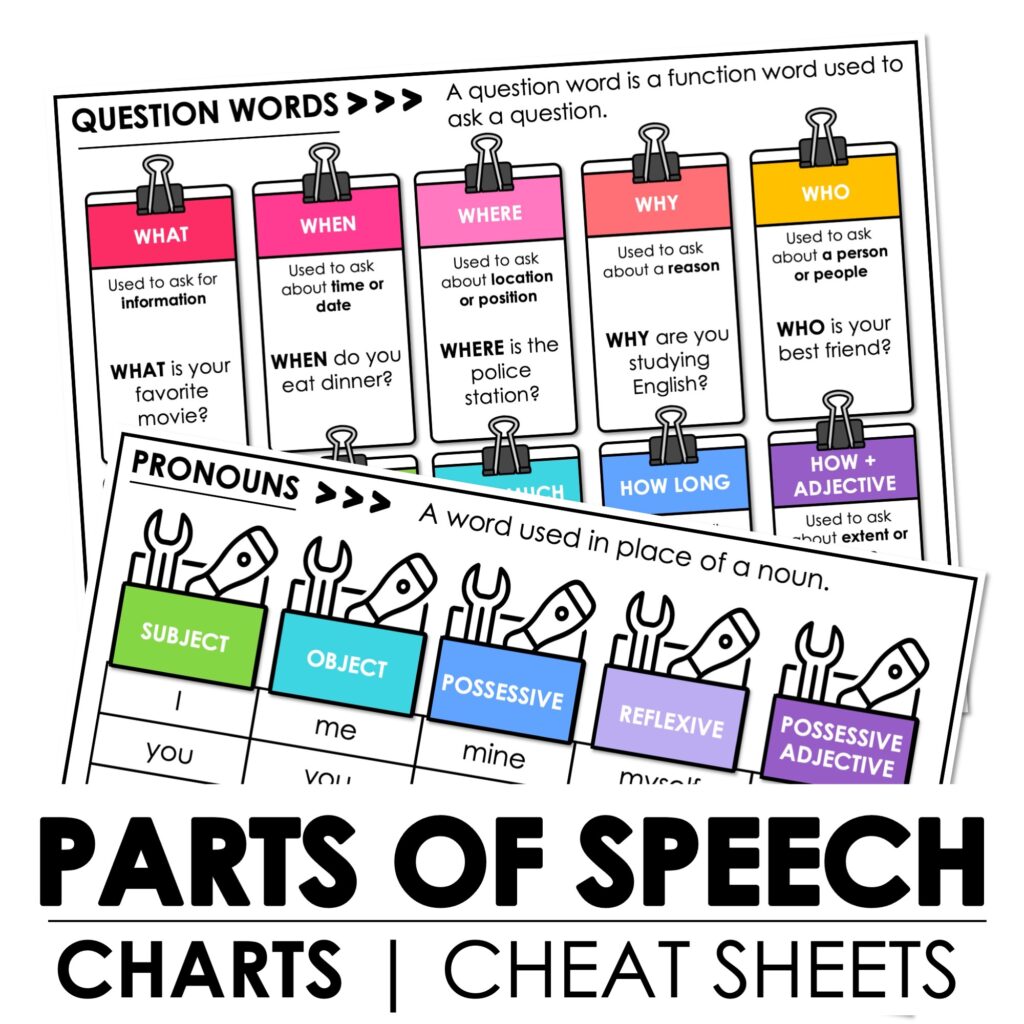
Parts of speech can feel overwhelming for English learners, especially when students are still building vocabulary and sentence structure. Visual grammar charts make the information easier to understand because students can see each category clearly, connect it to examples, and use the chart as a reference during real classroom tasks.
Instead of asking students to memorize long grammar explanations, these charts give them a simple visual reminder they can use again and again.
What Parts of Speech Are Included?
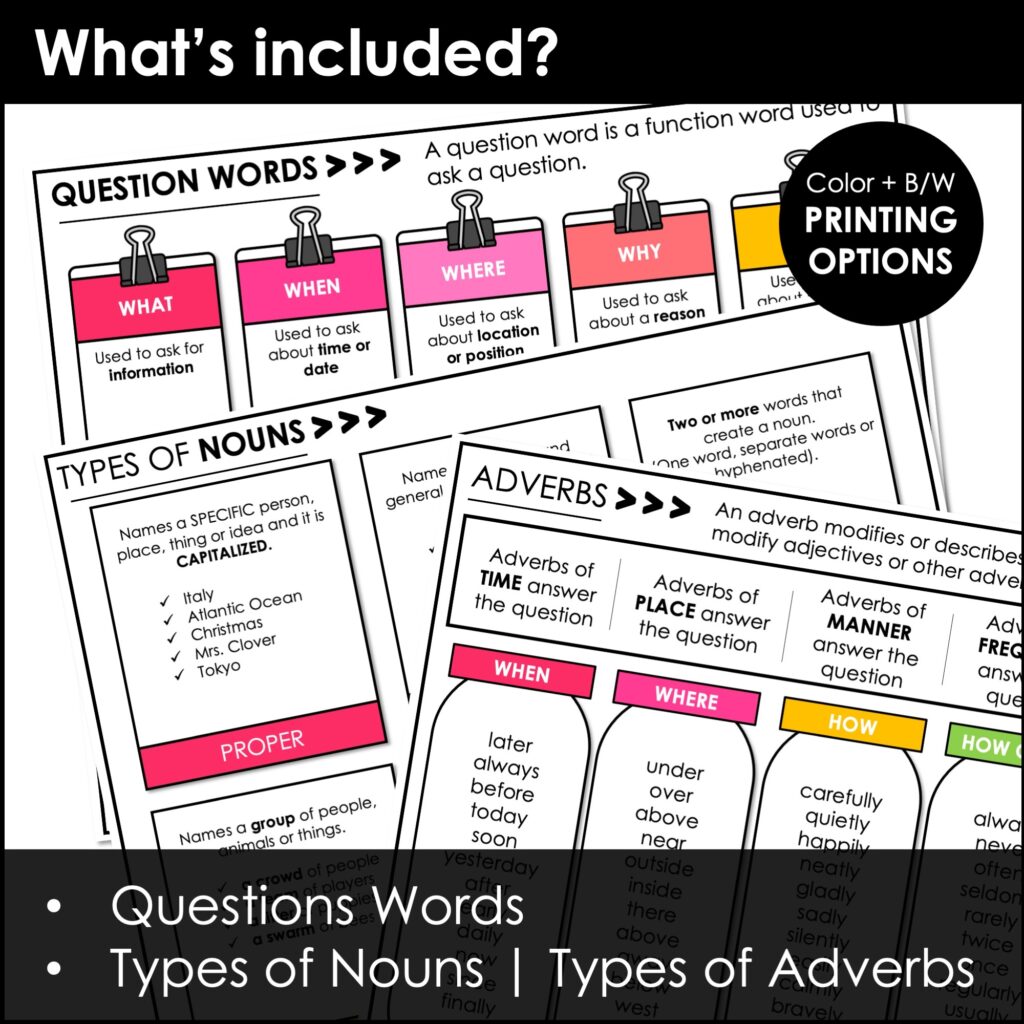
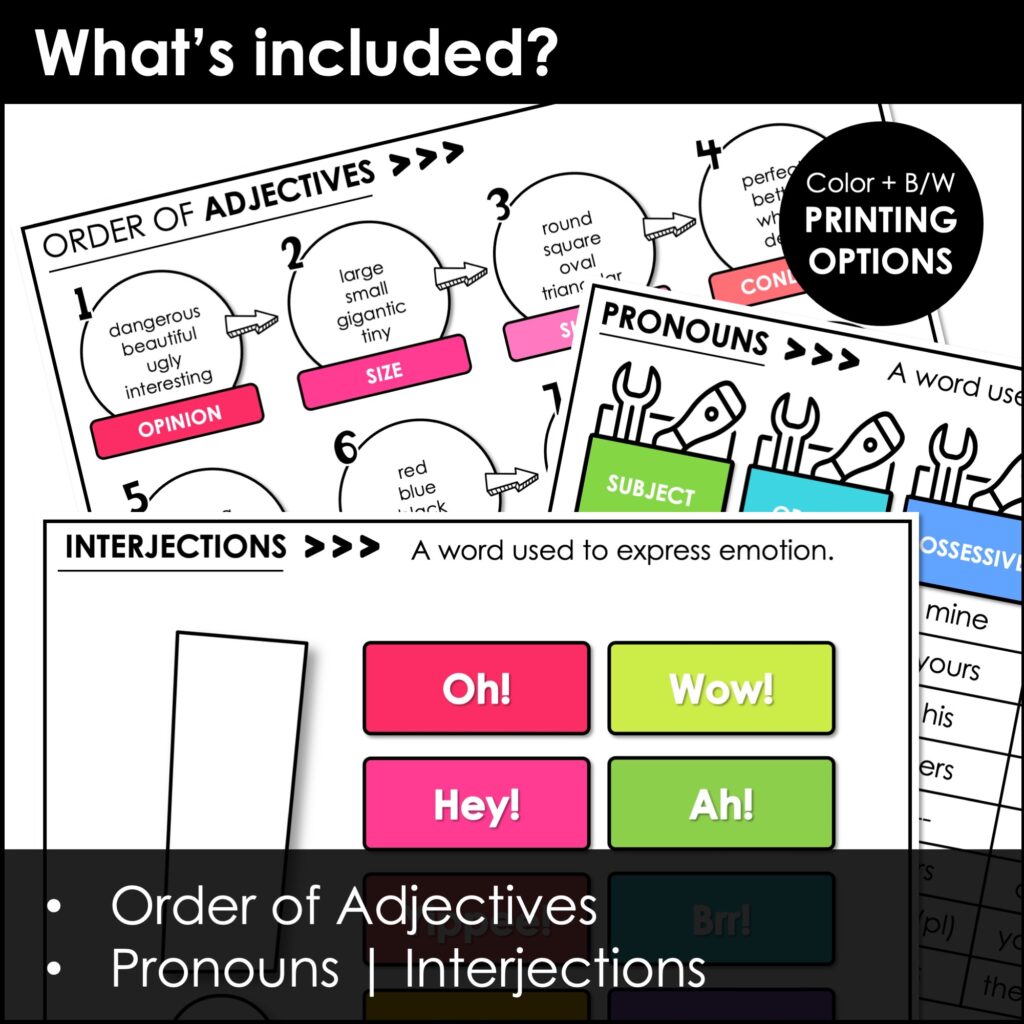
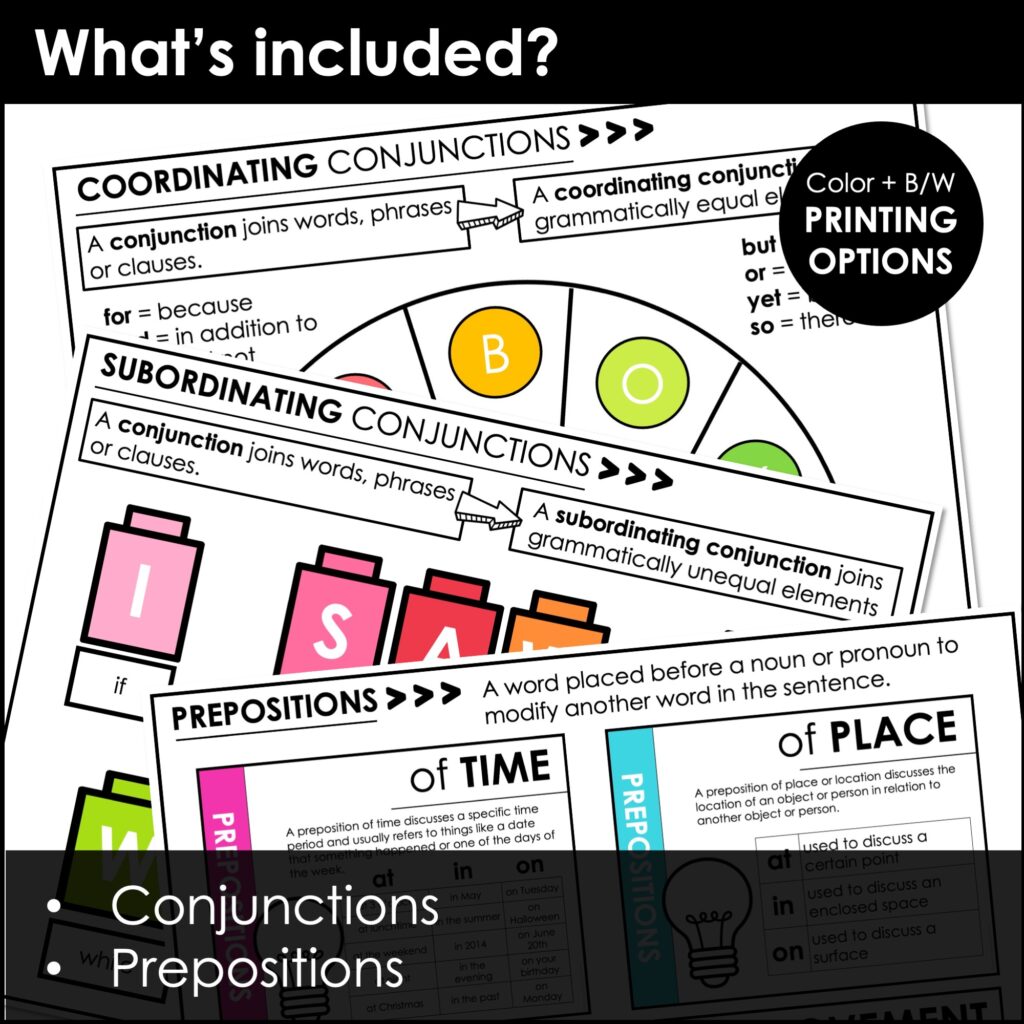
Each chart gives students a colorful visual representation of an important grammar category. The set includes full-color versions and black-and-white options for lower-ink printing.
- Nouns: words that name a person, place, thing, idea, or object.
- Adjectives: words that describe nouns and help students add detail to sentences.
- Pronouns: words that replace specific nouns when the reader or listener knows what is being discussed.
- Verbs: words that show actions, feelings, or states of being.
- Adverbs: words that describe verbs, adjectives, or other adverbs.
- Conjunctions: words that connect ideas and help students build longer sentences.
- Interjections: short exclamations that express emotion or reaction.
- WH question words: words students use to ask questions and build conversations.
- Prepositions: words that connect nouns to other words and show relationships such as place, direction, or time.
To take a closer look at the full set, click here: Parts of Speech Cheat Sheets.
Why ESL Students Benefit from Grammar Reference Charts
Grammar charts are especially useful for English language learners because they reduce the need to remember everything at once. Students can look back at a visual reference while they are writing, speaking, editing, or answering grammar questions.
Parts of speech charts can help students:
- identify words in a sentence
- build stronger sentences
- understand grammar vocabulary
- improve writing accuracy
- add details to speaking and writing
- ask and answer questions with more confidence
- review grammar independently
They are also helpful for mixed-level classes because students can use them at different levels. Beginners may use the charts to identify basic word types, while stronger students can use them to expand sentences and improve sentence variety.
Easy Ways to Use Parts of Speech Charts in the Classroom
You can use grammar reference charts in many ways throughout the year. They are not just posters for decoration. When used intentionally, they become part of your classroom routine.
1. Add them to student notebooks
Students can glue the charts into grammar notebooks or writing notebooks. This gives them a personal reference they can use during assignments.
2. Display them during writing time
Keep the charts visible when students are writing sentences, paragraphs, or stories. This helps them check word choice and sentence structure independently.
3. Use them during mini-lessons
Project one chart at a time and focus on a single part of speech. For example, use the adjective chart before asking students to add more detail to their writing.
4. Use them for grammar review
Before a grammar game, task card activity, or writing assignment, quickly review the relevant chart. This keeps the grammar language fresh.
5. Keep them in writing centers
Place printed charts in a writing center so students can check grammar terms, sentence examples, and vocabulary while working independently.
Verb Charts for ESL Grammar Practice
Verb charts are another powerful grammar support, especially when teaching irregular verbs, regular past tense endings, auxiliary verbs, and verb conjugation.
A strong verb chart helps students see patterns instead of memorizing a long list of disconnected words. For example, irregular past tense verbs can be grouped by similar spelling or sound changes. This makes the learning process feel much more manageable for ESL students.
Instead of giving students a huge three-column list of verbs, grouping irregular verbs helps them notice patterns from present to past. Students are often less intimidated when the information is organized visually.
This free irregular verb chart is a sneak peek of the full Verb Tense Cheat Sheets resource.
You can also read more about teaching irregular verbs in this blog post: Irregular Verbs Made Easy.
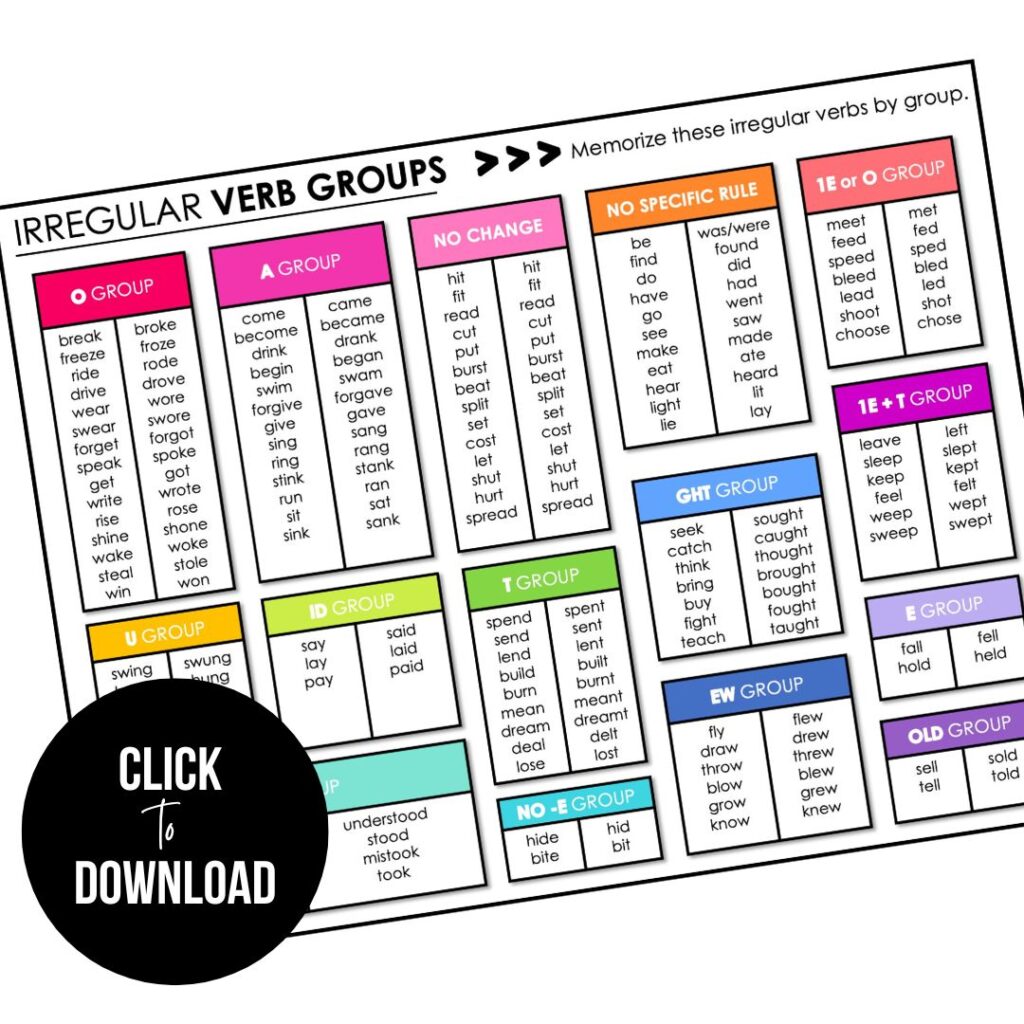
Grab this free irregular verb chart to start teaching irregular verbs by group. It will be sent straight to your inbox in full color and black-and-white.
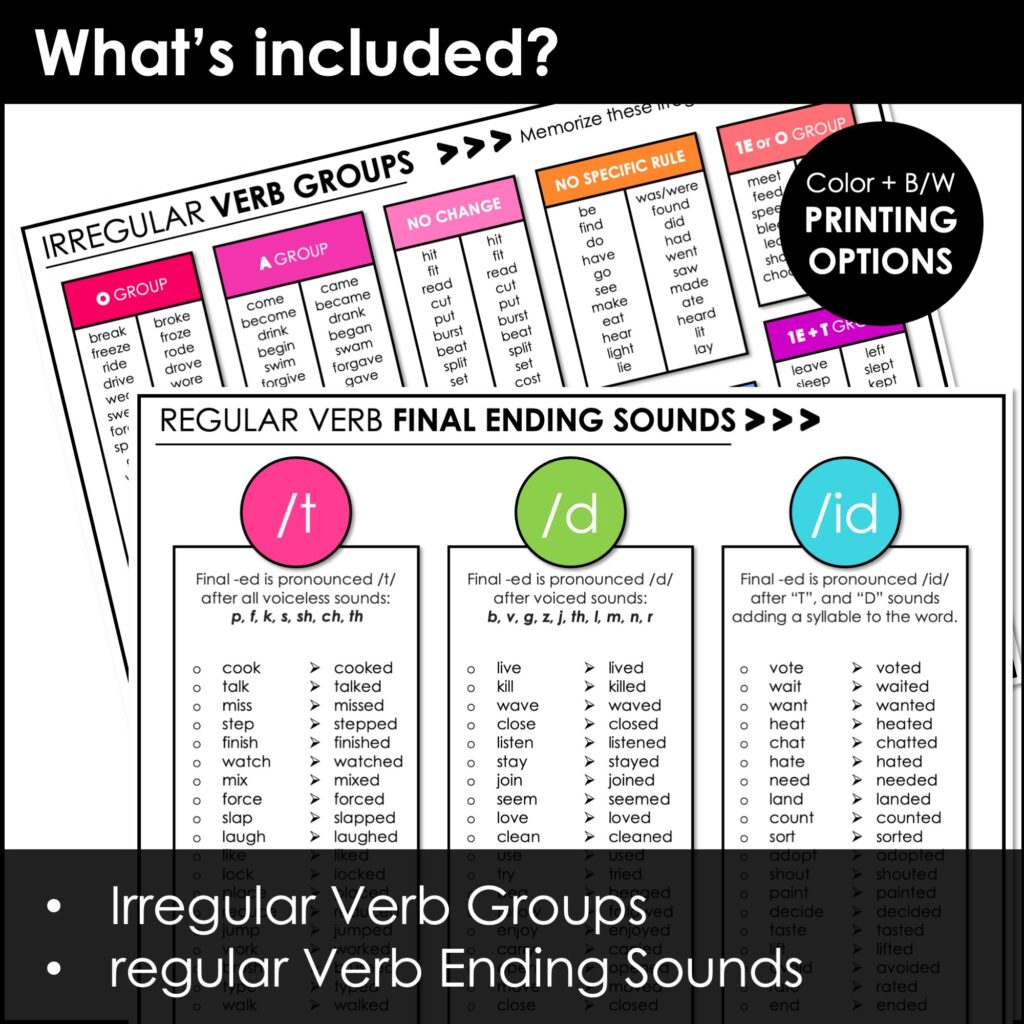
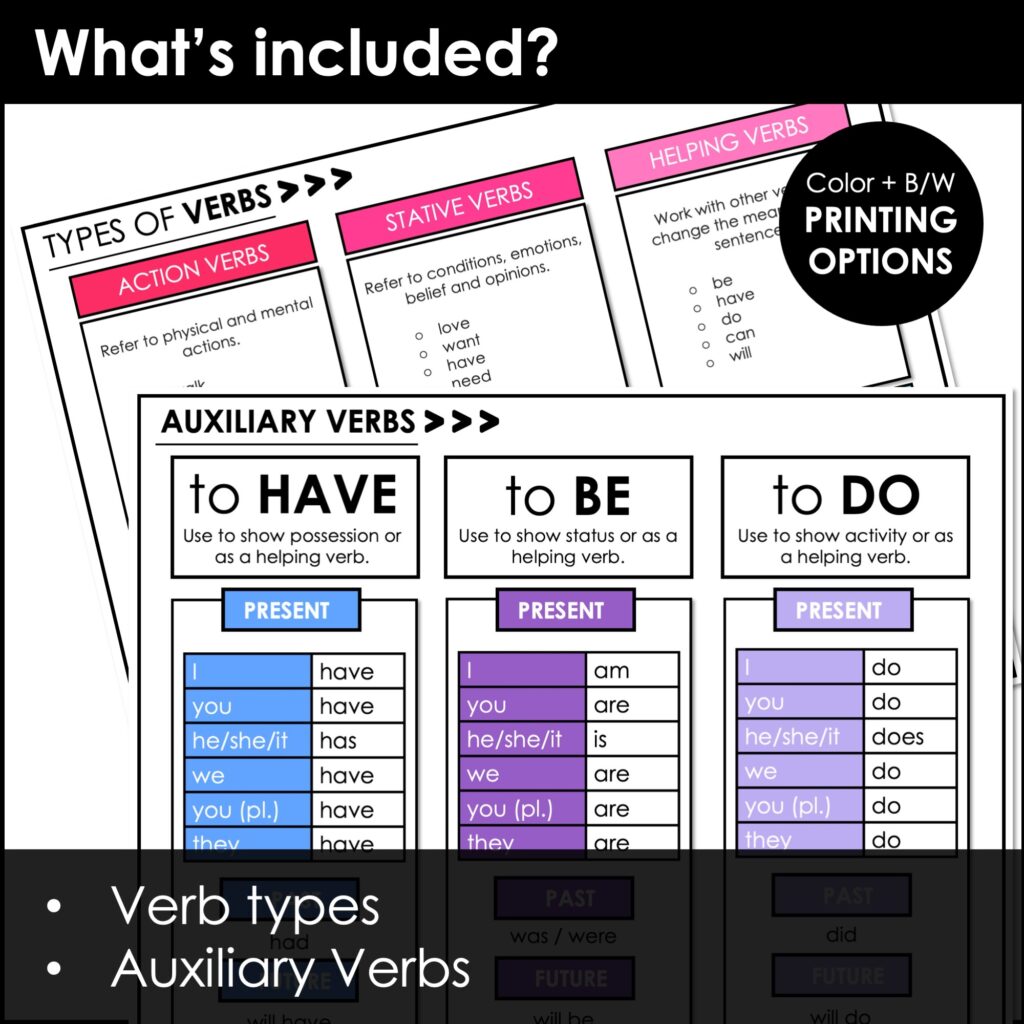
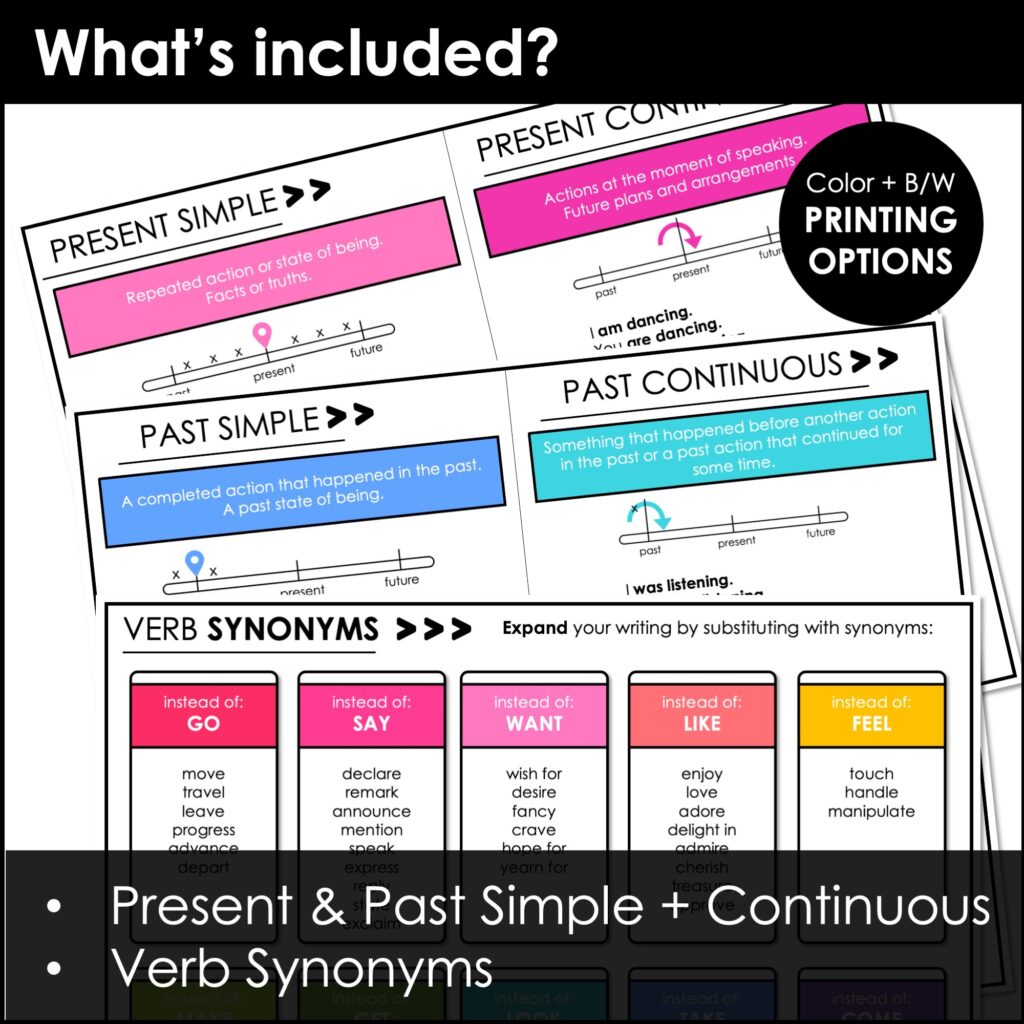
You can also purchase the complete verb chart set here: Verb Charts and Grammar Cheat Sheets.
Final Thoughts
Parts of speech charts and verb charts are simple tools, but they can make a big difference for ESL students. When students have clear visual grammar references, they are more likely to use grammar language correctly, build stronger sentences, and feel confident during writing and speaking activities.
Whether you display them on the wall, project them during lessons, or add them to student notebooks, these charts give learners a reference they can return to all year.
Happy teaching,
Brooke


