

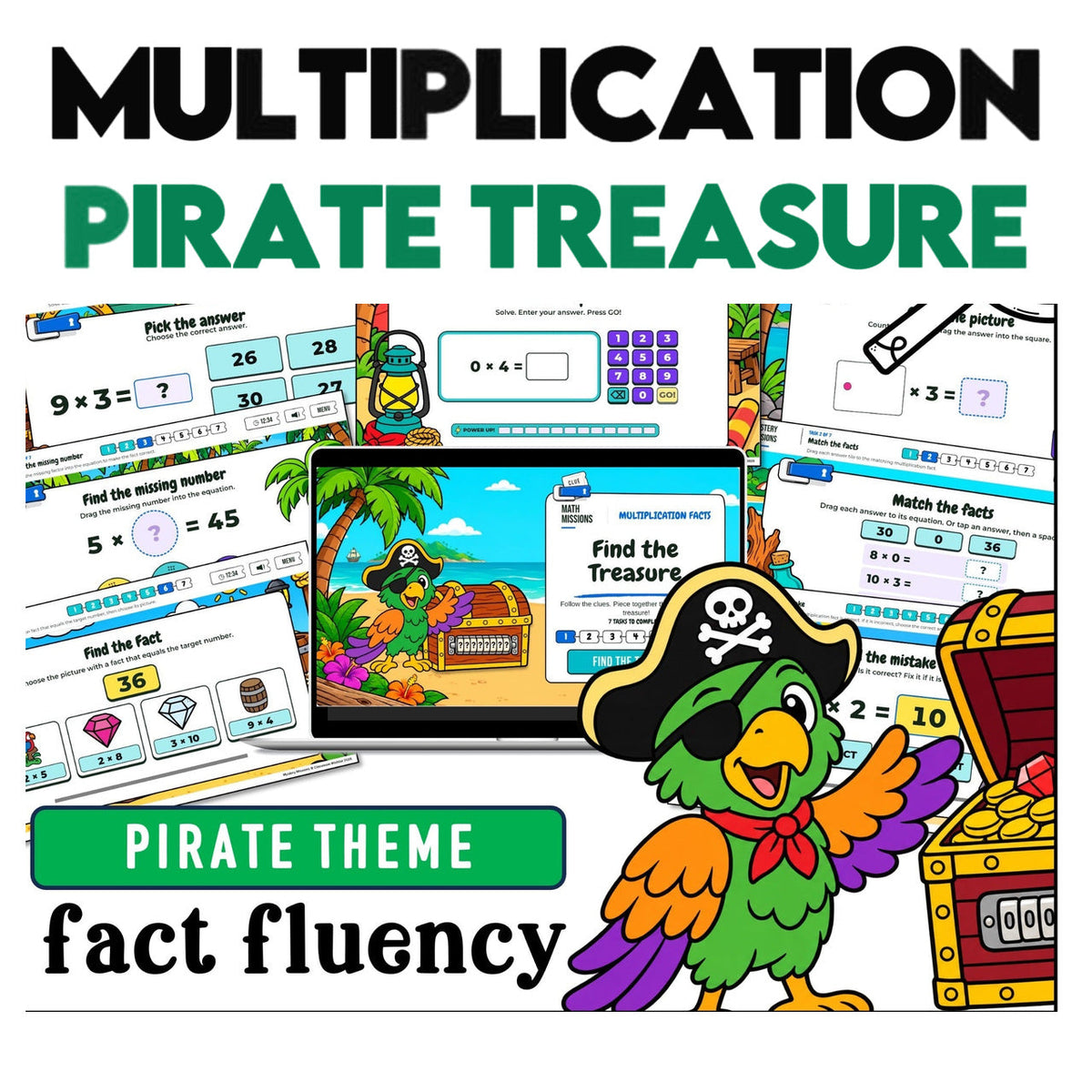
One group needs more practice with doubling, while another is ready for a mixed review. A shared pirate story can keep the class together while you choose a fact set that fits each group’s current goal.
Play Find the Treasure
Find the Treasure is a digital multiplication escape room for Grades 2–3. Nico’s treasure map has scattered across the island. Students solve multiplication activities, find seven map pieces, and use the rebuilt map to reach the treasure chest. Across seven activities, students work with the times tables you select. They match factors and products, find missing numbers, model equal groups, and explain why an answer makes sense.

Use one adventure with different practice targets
Try a short check before deciding on a group: give three facts students have already seen and ask them to explain one. Students who are still doubling may benefit from Beginner. Students who know the anchor facts may benefit from a Custom set that revisits several harder tables.
Use the mission before, during, and after a lesson
- Before play: Give a short check using 2 × 6, 5 × 7, and 8 × 4 or replace them with facts you’ve taught. Ask students to explain one answer. Use the responses to plan the practice groups for this lesson.
- During play: Choose an anchor set for one group and a targeted Custom set for another. If you run the mission with the whole class, choose one shared set and vary the supports, such as a chart or quick drawing.
- After play: Give each group two facts from its focus set and one new example that uses the same strategy. Use that check to decide which facts to revisit next lesson.
A teacher’s perspective
Group students around a strategy or set of facts they’re practicing today. Change the groups after the next quick check.
Compare responses on matched examples rather than comparing how quickly two groups finish the game. Each group could be practicing a different fact set, so an explanation gives you a fairer picture of what to teach next.
Keep charts or simple drawings available when you want to hear explanations. For students ready to work independently, remove the support for one fresh exit question and see which strategy they choose.
Choose your facts and set up the game
Choose Beginner for the 0s, 1s, 2s, 5s, and 10s, Standard for tables 0–10, or Extended for tables 0–12. Custom lets you pick at least three tables from 0–12. Select 84, 126, or 168 questions based on the time you have. Every length includes all seven activities and the ending.
Use the teacher access instructions on the listing, then share a classroom code. Students join using a nickname and can play individually, in partners or small groups, or as a class. Test Mystery Missions on your school device before assigning the game.
Optional Amazon tool for the hands-on follow-up
As an Amazon Associate I earn from qualifying purchases. The following link is an affiliate link.
Use the numbered dice for a teacher-created roll-and-multiply challenge. Agree on which rolled values fit your practice set and reroll the others. Leave out the speed element and ask partners to compare strategies.
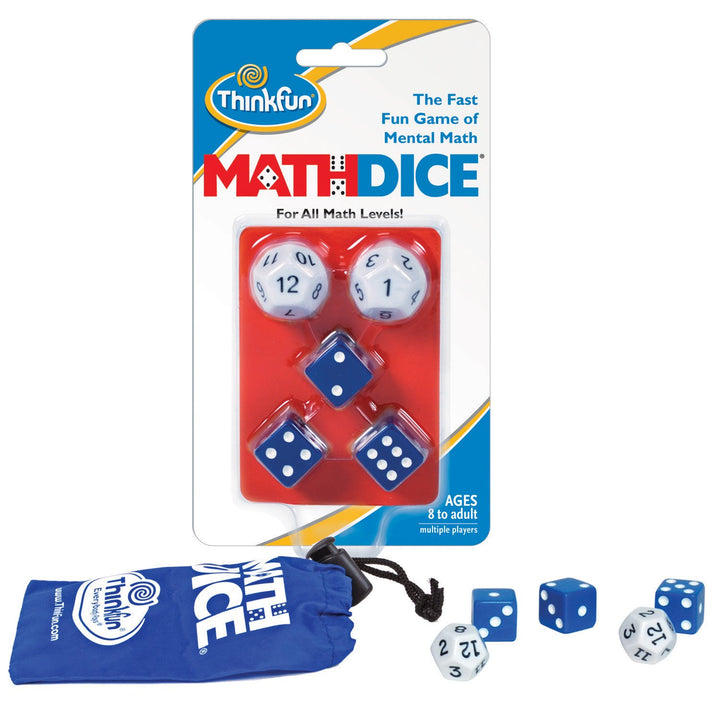
See ThinkFun Math Dice on Amazon
Frequently asked questions
Do I have to choose the longest version for advanced students?
No. Pick the length you can support in your teaching block, then increase the challenge by choosing the right facts or asking students to explain a strategy.
How can I choose times tables for groups at different levels?
Start with a quick check on facts you’ve taught. Use Beginner for a group reviewing anchor facts, or select at least three tables in Custom to target a different practice goal.
Can I run the pirate mission as one whole-class activity?
Yes. Choose a shared set of facts and vary how students show their thinking. Some can sketch groups while others explain a mental strategy. Give everyone time to answer before entering the class response.
What if one partner answers every question?
Have both students work out the answer first. One student explains and the other checks or offers a different strategy. Switch roles on the next prompt.
How can I compare progress when groups practice different facts?
Give each group a brief follow-up using its own focus tables. Compare the quality of each student’s explanation with their warm-up response rather than comparing scores between groups.
Explore Find the Treasure to see the game previews and choose the multiplication practice your class needs.


