

3 Fun Ways to Use Vocabulary Memory Games in Small Groups

Vocabulary practice works best when students are actively using the words—not simply memorizing a list. Memory matching games turn review into a purposeful, low-pressure activity where learners say new words, notice picture-word connections, and practice with their classmates.
The Memory Match Vocabulary Games Bundle gives teachers a ready-to-use way to build vocabulary practice into small groups, learning centers, early-finisher routines, and seasonal lessons. Here are three practical ways to use the games in your classroom.
Explore the Memory Match Vocabulary Games Bundle
Why memory games support vocabulary learning
Matching a word to an image gives students more than one way to remember new vocabulary. They see the picture, read or hear the word, say it aloud, and retrieve it again when they look for the matching card. That repeated exposure helps vocabulary move from short-term review into long-term memory.
- Repetition without worksheets: students review the same words several times while playing.
- Meaningful associations: images help learners connect a new word to a clear idea.
- Speaking practice: students say each word as they turn over or match a card.
- Low-pressure participation: small groups give learners a comfortable place to take risks.
- Teamwork and focus: players listen, wait for their turn, and encourage one another.
1. Build vocabulary through small-group play
Small groups are an ideal setting for memory games because every learner gets frequent turns. Give each group one themed set and model the language students should use before they begin.
How to use it
- Place the cards face down and divide students into groups of two to four.
- Students take turns turning over two cards and looking for a matching word and picture.
- Ask players to say the vocabulary word, use it in a short phrase, or describe the image before keeping the pair.
- At the end, have each student share one word they remember and one word they still want to practice.
Why it works
- Students repeat target vocabulary naturally instead of completing isolated drills.
- Pairs and small groups create more speaking opportunities than whole-class review.
- The game format keeps attention high while students practice pronunciation and recognition.

2. Create themed learning centers
Memory games make excellent learning-center activities because they are easy to explain, reusable, and simple to connect to your current unit. Choose one theme for the whole class or place different sets at separate stations so students can rotate through several kinds of vocabulary.
How to use it
- Set up a few stations with a different themed game at each table.
- Give groups a clear rotation time and a speaking goal for every station.
- Ask students to record new words, sort cards into categories, or write a sentence after playing.
- Finish with a quick share so students can teach one useful word to the class.
Why it works
- Learning centers add variety and movement to vocabulary review.
- Seasonal sets fit naturally into holiday lessons, while core vocabulary sets work all year.
- Teachers can differentiate by choosing a familiar theme for developing learners and a more challenging set for confident speakers.
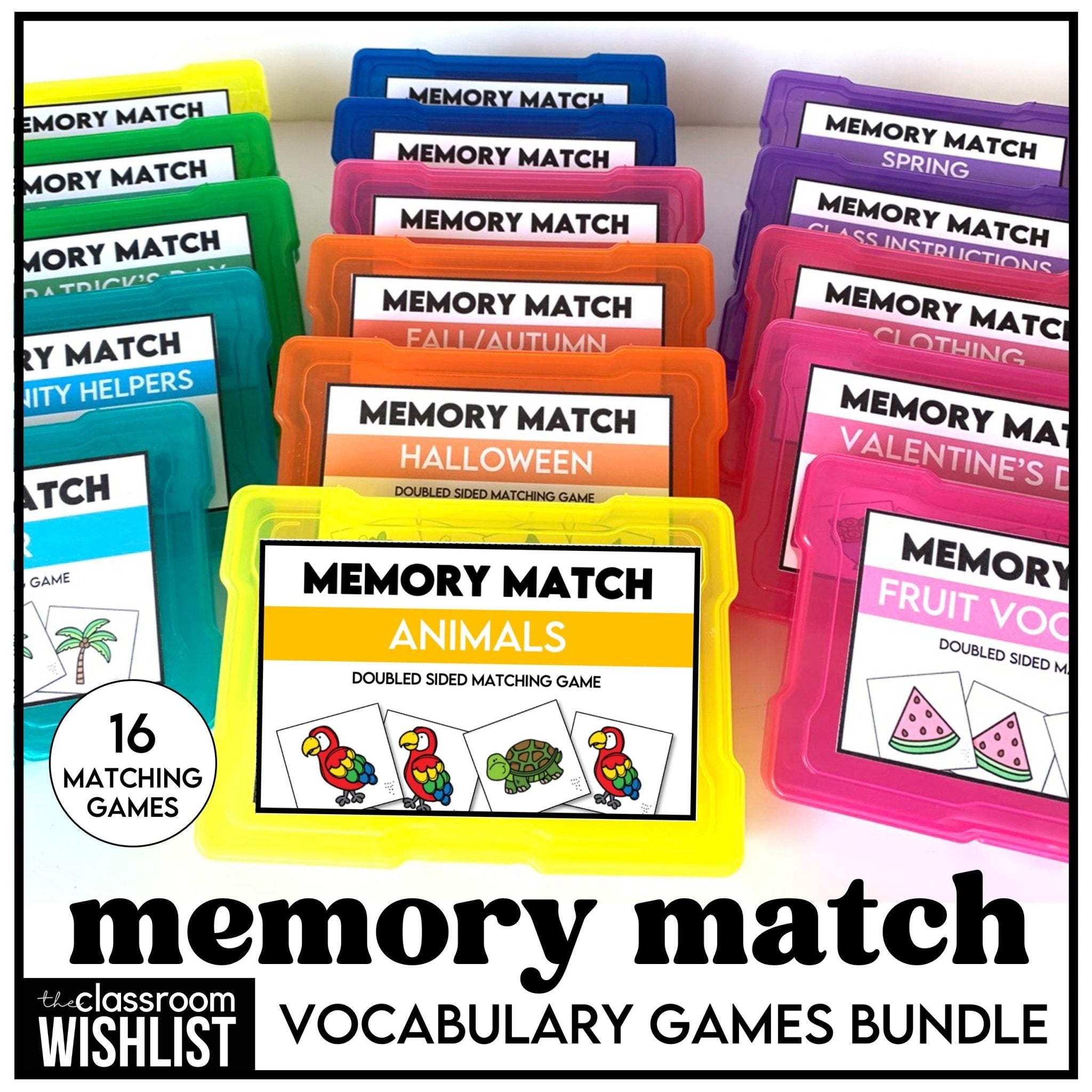
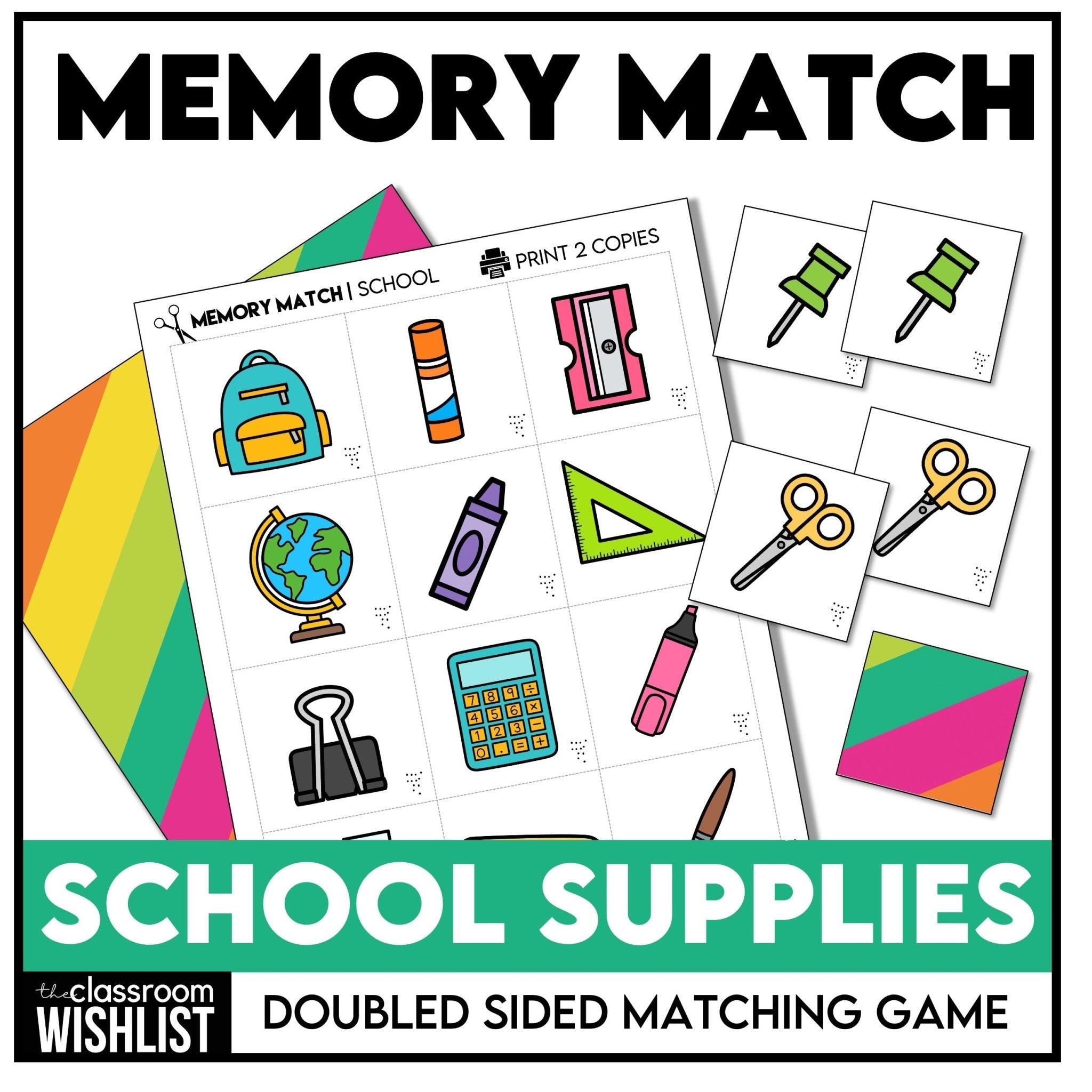
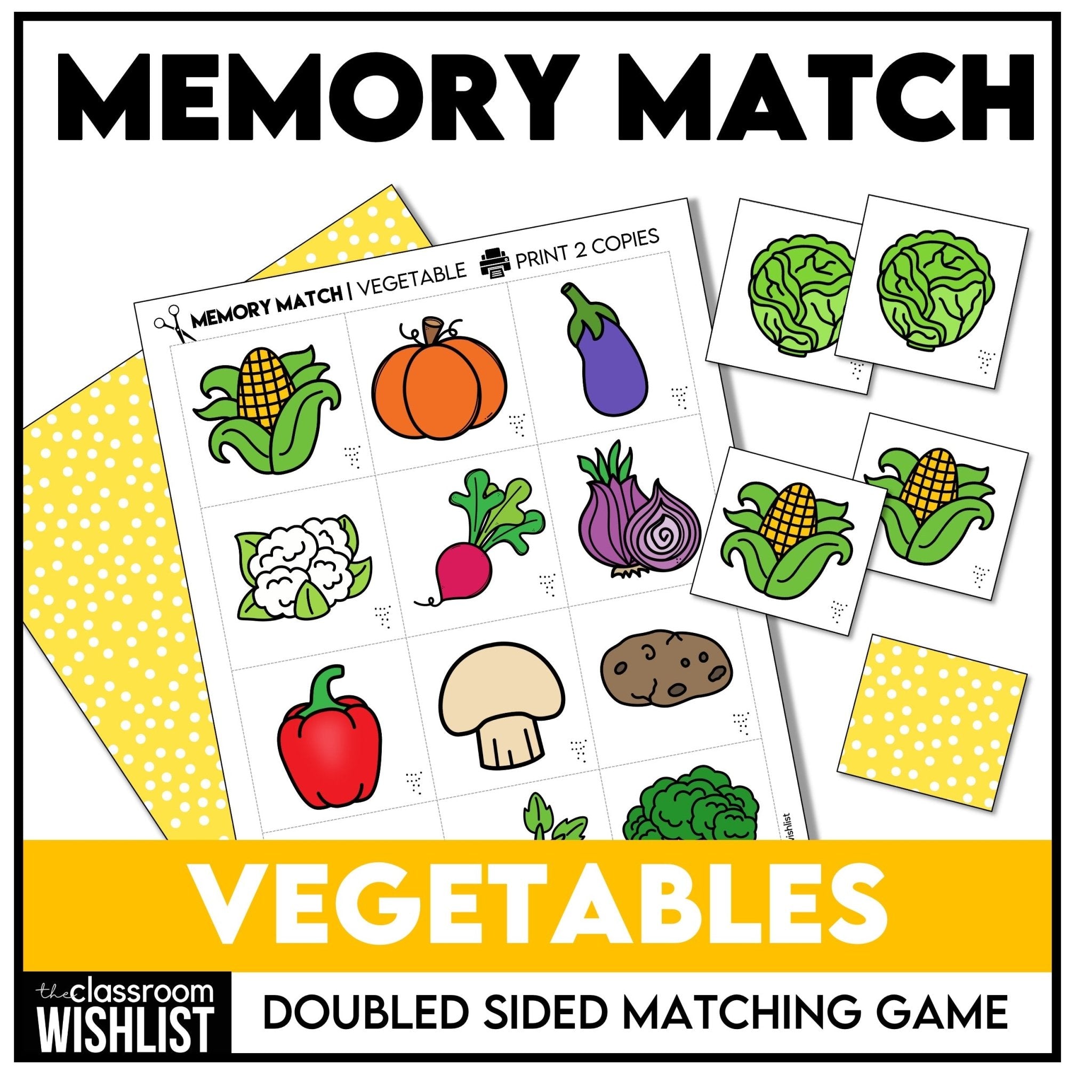
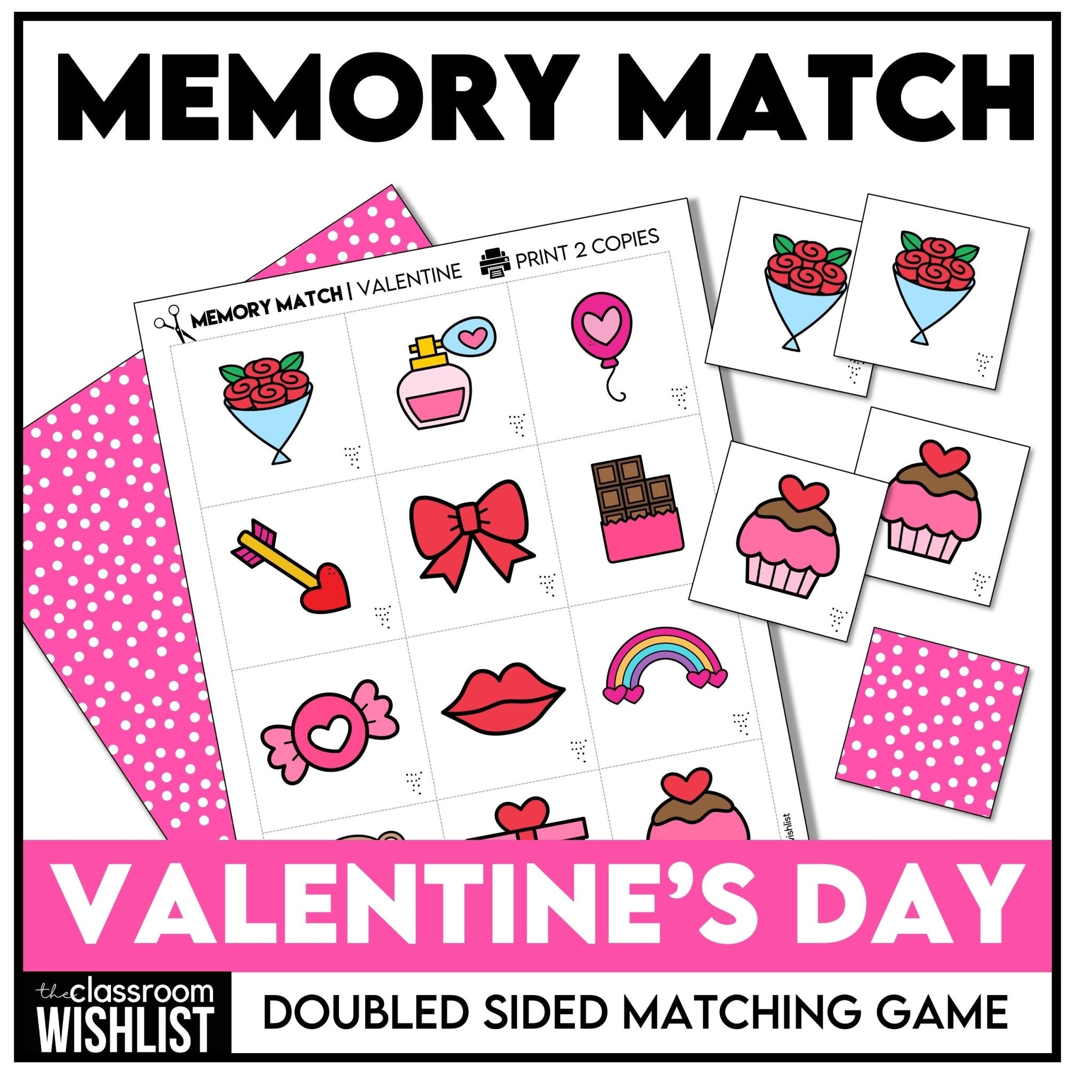
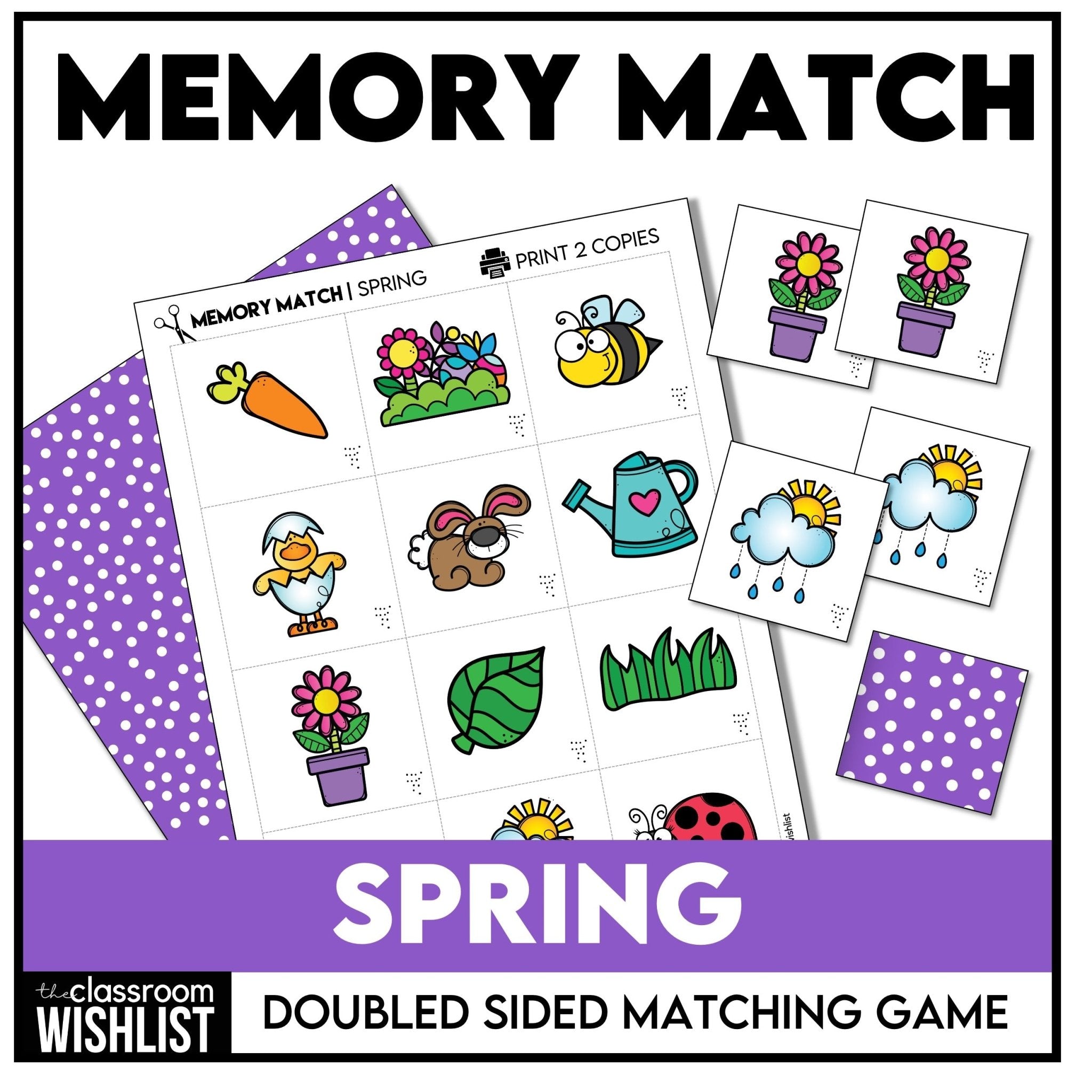
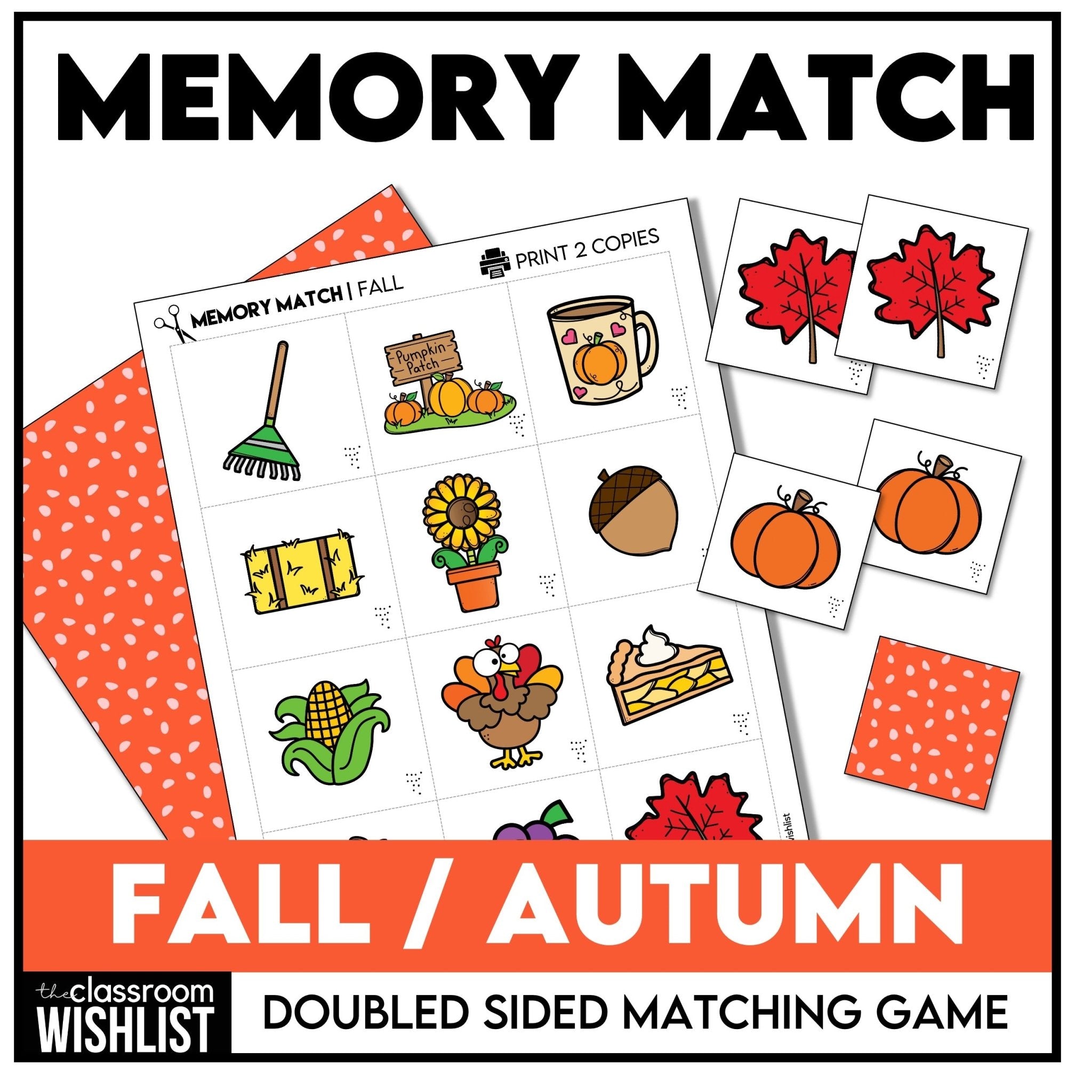
Use the themed cards to reinforce classroom language, school supplies, food, community vocabulary, seasons, and holidays. Students get repeated practice while moving through an activity that feels different from a traditional vocabulary worksheet.
3. Support early finishers and enrichment
Keep a few memory games in an early-finisher area so students can continue practicing vocabulary after they complete their main assignment. The activity is structured enough for independent use, but it also works well with a partner.
How to use it
- Place the cards in a clearly labeled basket or center.
- Invite students to play independently, with a partner, or in a small group.
- Ask early finishers to keep a vocabulary log with a definition, drawing, or example sentence for each new word.
- Challenge confident learners to describe a card without saying the word while their partner guesses.
Why it works
- Students stay productive without needing another worksheet.
- Extra practice feels like a choice, which encourages motivation.
- Learners can work at their own pace and repeat a set until the vocabulary feels familiar.
Make vocabulary practice flexible all year
The bundle includes a variety of core vocabulary, seasonal, and holiday themes, so you can return to the games throughout the year. Use familiar words for review, introduce a new theme before a unit, or mix two sets to encourage students to compare categories.
What teachers love about the Memory Match Bundle
- Engaging: colorful picture cards make practice feel active and enjoyable.
- Low prep: print, cut, and start playing.
- Versatile: use the games in small groups, centers, intervention, or enrichment.
- Reusable: keep the sets ready for review all year.
- Skill-building: strengthen vocabulary retention, pronunciation, focus, and communication.
Memory games are more than a filler activity. With clear routines and a little follow-up, they become a practical way for students to see, say, remember, and use new vocabulary.


